
 I’ve been tracking the shape of grief since the first nightmare months after my son Noah’s suicide in 2013. The intensity of traumatic grief once filled every moment. The core of my identity, relationships, and activities was being a suicide loss survivor. Over 11 years, grief has gradually receded from the forefront. It takes up less space in my heart and mind and daily life. This has opened up space for new emotions, experiences, and purpose while still mourning my child.
How did this shift happen? I’m honored to visit this excellent blog to reflect on my grief process and offer hope to other bereaved families.

Noah was one of those full-of-life guys with many friends, interests, and talents who hid his troubles. He struggled with depression and anxiety after the suicide of a friend and found little help in treatment. While home from college on medical leave, two days after running the L.A. Marathon, he took his life. He was 21.
In the first few years after Noah’s suicide, I saw everything through the agonizing lens of grief. Every line from a song, every intention for a meditation reminded me of the shock and pain. The world was a hotbed of triggers, from gruesome Halloween decorations to intact families at a restaurant. I found signs of Noah everywhere, in rainbows, hummingbirds, oceans.
I was immersed in—sometimes swamped by—what psychologists call a “loss orientation,” focused on mourning. Moving toward a “restoration orientation” that allowed me to re-engage in life wasn’t quick, linear, or finite. It took the balm of time, but also lots of work and support.
When you lose someone to suicide, you call on everything you have to survive. I was lucky to have family, friends, community, and spiritual practices that grounded me. I had access to traditional therapy, mind-body approaches like EMDR, and support groups for suicide loss survivors. My oldest friend was a social worker who accompanied every step of my journey with love and wisdom. All these were lifelines that allowed me to move through grief at my own pace, back and forth between loss and restoration orientations, without pressure to “heal” quickly.

It also helped that I was well-acquainted with grief from losing my parents in my 20s and from researching laments and mourning customs in a Greek village when I was a grad student. So I wasn’t afraid of death, and I was inclined to express grief openly.
I was also inclined to write my way through tough emotions. After scrawling incoherent cries in my journal, I began blogging out of a fierce need to order my thoughts, tell my story, and recover my agency. The suicide made me feel small, silenced, betrayed. It shattered my dreams for my child and everything I believed about life and relationships. A key to healing after suicide is rebuilding those “assumptive worlds” of trust and belief, says Dr. Jack Jordan. I started doing that work on the blog, in a grief memoir, and in outreach to fellow survivors.
Meanwhile, I lamented Noah through poetry, finding comfort in speaking directly to him through elegies. As in this excerpt from “Tending the Shrine, Two Years On,” in my new poetry book:
I dust your album and open
to a boy with a handful
of grasshopper, a grinning teen
atop a sailboat mast, then
a student home for winter break,
gaunt and haunted as a refugee.
When did the end begin?
Like a scrim it shades
every picture,
each moment captured
nearly eclipsed.
The more I bore witness on the page, the more I noticed shifts in my grieving. Like when I made it through a day without crying or woke up breathing deeply. Or when I could list the good things I did to counter my long rap sheet of should-have/could-haves. Gradually, I could face holidays like Mother’s Day or Passover with less dread. Slowly, gratitude, joy, and faith crept back in.
Experts say that exploring one’s grief and ruminating on traumatic loss can open the way to “post-traumatic growth” with new relationships, strength, and purpose. Though I scoffed at this idea in the early years, eventually it made sense. I realized I’d become more attuned to and compassionate toward others’ suffering. I was giving full attention to my living son, Ben, and deepening our connection. I’d sought out suicide prevention training and added that messaging to public speaking about Noah and my book. I dreamed of publishing a collection of grief poetry to honor Noah.
By ten years after the suicide, I was more focused on intentional remembering than on intentional mourning. My husband and I made a round of visits to Noah’s friends to share memories. I wrote love notes to everyone who’d been part of the circle of care after the suicide. I decided to make marking Noah’s birthday a bigger deal than his death anniversary.

Suicide loss has shaped me in many ways, but it no longer defines me. Grief waves still come, though less often and less intensely; I let them wash over me and feel closer to Noah. I still write elegies to him, like “Ripped” (below). But lately, my poems have been venturing beyond the key of grief into new tonalities.
I’m letting myself be happy when I feel happy, despite being the mother of a suicide. The pain of losing Noah, once so piercing, has become an ache that flares and fades. I carry him with me always.
Ripped
Between the unmanned
lifeguard stations
surfers drift and bob like seals
in the swell. Big red lifeboats
lie beached on their sides.
I used to drive you here early
Sundays, after the donut shop,
before the taco place. You
suiting up behind the van
(that rip in the shoulder we never fixed),
eyeing older surfers with cool
nods, trotting fleet-footed
across the sand; me straining
to spot your lean torso in the lineup.
Once the fog was so thick I lost
sight of you before you reached
the break—weak with fear
thank God
you got out quick.
I never saw you catch a wave. Maybe
I missed it. Maybe it was enough
to paddle out and float inside
that briny vast embrace, lulled
by the brightening horizon.
Driving solo five years later,
you came back to claim
that peace, any peace,
but found it
gone.
You got out
quick.
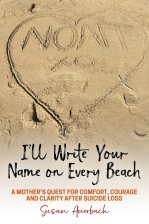
Now I write your name on every beach,
scan the waves for your wake.
To my fellow survivors: Every path through traumatic grief is unique. I hope you can be with your grief, seek support, practice self-care, and open to growth. You might revisit these questions from John Schneider to notice shifts over time: “What is lost? What is left? What is possible?” Wishing you hope and healing.

© 2024 Susan Auerbach. Essay written for Speaking of Suicide.


I am at 9.25 years and like you expressed, time and writing have removed its fangs. Writing also helped me process the loss and see growth. It helped me express my pain.
Hi AnneMoss,
I know and appreciate some of your writing. I’m sure it has helped others face and understand their pain and move toward growth. Thank you for all that you do!
Susan
I was reminded recently that September is Suicide Prevention Month. I find that ironic as it seems like whenever Labor Day arrives I find myself struggling more than any other time of the year. I think it has to do with Labor Day represents the official kick off to the Holiday Season……and everything that it represents. Once again I’m feeling the tug o’ war taking place inside of me. I’m still holding my ground on the passive side of SI but I can feel a fierce battle going on to pull me over into the active side. Your story has reminded me of the pain that loved ones go through every time someone succumbs to the Darkness. Thank you for this reminder. I am in therapy and have been going deeper than I’ve ever gone before. It’s opening up new wounds, but, I’m hoping it will be worth it and I can find my way into the Light once more. I’m sorry for the pain you went through, but…..(I mean no disrespect here even though what I’m about to say may seem very selfish) it lead me to your post and has given me a lifeline…..so thank you for sharing your story and your pain with me….with all of us!
Hi Jerry,
I’m sorry you’re hurting! Thanks for sharing here. I’m grateful Susan Auerbach’s post touched you in such a meaningful way.
Based on what you wrote about the changing of the season, this post lamenting summer’s end might be of interest: https://staceyfreedenthal.com/losing-summer/ (It’s on my other site.)
Been there, done that, doing that, Susan. I trust your Noah and our Andrew (2009 @ 20 yo) are commiserating as we speak. They were both tall, lanky, and adventurous. My ‘crusader’ days to end suicide in the world have waned, as content as possible to live on in his absence. Best always.
Hi George,
I’m so sorry to hear about your Andrew. Two adventurous lives, so tragically interrupted. Thank you for all the time you’ve spent crusading to end suicide so other families might not have to suffer.
Susan
Hello Susan, I just read your heartfelt essay about the loss of your son ten years ago. Your writing is powerful, poignant, and compelling. I hope many people will read your books.
Ten years ago, I attempted suicide. I am one of many “survivors” of suicide attempts. I am writing a book that will hopefully be published next year. The tentative title is From Despair to Gratitude: Healing My Broken Story. I write about what it was like for me to become suicidal, attempt suicide, survive, and thrive in the aftermath.
I agree that every story of traumatic grief is unique.
Shalom, Salam, Peace,
Michael Robin
So heartbreaking and beautiful at the same time. Thank you for writing and sharing this powerful piece. As a Mom who lost her precious son to suicide nearly 14 years ago and so related to your words. Sending you love, friendship and T.J. hugs. I will keep your Noah in my heart always.
Hi Wendy,
I’m so sorry for the loss of your son. There are too many of us mourning moms out there! I hope you have been getting the support you need as you move through your grief.
In shared sorrow,
Susan